OUR AIMS
The COVID-19 pandemic paralysed education systems worldwide; at one point, school closures forced over 1.6 billion learners out of classrooms (UNESCO 2020). While smaller in scale, widespread school closures are not unique to COVID-19: teacher strikes, summer breaks, earthquakes, viruses such as influenza and Ebola, and weather-related events cause schools to close. Closures result in large learning losses, which have been documented in North America, Western Europe, and Sub-Saharan Africa (Cooper et al. 1996; Slade et al.
2017; Jaume and Willen 2019; Andrabi, Daniels, and Das 2020).
This project provides some of the first experimental evidence on strategies to minimise learning loss when schools close, evaluating a randomised control trial with primary school children in Botswana.
ABOUT THE PROJECT
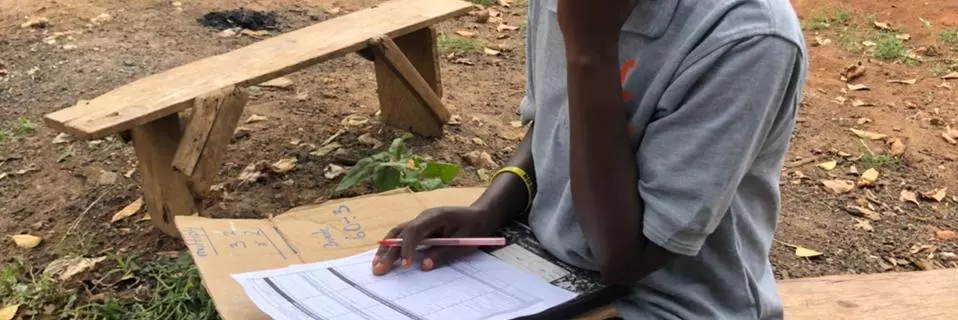
Researchers evaluate two "low-tech" solutions that use SMS text messages and direct phone calls to support parents to educate their children. The project used a sample of 4,500 families with primary-school-aged children across nearly all regions of Botswana.
The children were randomly assigned to either:
- Treatment group 1
Children in this group received SMS messages providing a few basic numeracy problems each week. - Treatment group 2
Children in this group received live phone calls from instructors (averaging 15-20 minutes in length) as well as the SMS text messages. Direct walk-throughs of learning activities sent via text were also covered in the phone calls. - or a control group (who received no intervention).
RESULTS
The phone and SMS program improved learning by 0.12 standard deviations, which translates to 0.89 standard deviations of learning per US$100, ranking among the most cost-effective interventions to improve learning.
The results suggest that combined phone and SMS "low-tech" interventions can generate substantial learning gains. These results also reveal that some level of direct instruction, which can be done cheaply and virtually via phone, can be necessary and that automated SMS messages alone do not produce lasting learning gains.
PUBLICATIONS AND MORE
CSAE Research Podcasts Episode Two
CSAE researchers and the collaborators discuss this project in episode two of the CSAE Research Podcast series.
December 2021
School’s Out: Experimental Evidence on Limiting Learning Loss Using “Low-Tech” in a Pandemic
School's Out: Experimental Evidence on Limiting Learning Loss Using “Low-Tech” in a Pandemic
NBER Paper
January 2021
PROJECT DETAILS
Timeline
2020-2021
Website
https://www.youth-impact.org/
Location
Botswana

Theme
Politics and Institutions
Associations