
OUR AIMS
The weakness of many states in sub-Saharan Africa is a key barrier to economic development and political stability. Weak tax systems across the continent are, in turn, both effect and cause: state weakness limits the ability of states to raise revenue effectively, while weak revenue collection limits investments in state building. How can governments in weak states breakout of this pernicious cycle of low state capacity and insufficient revenue collection?
This programme includes a series of research projects with city councils across Sierra Leone to support the reform of property tax systems. These projects build on collaborations with the central government, and use a combination of field experiments and institutional diagnostics to understand how governments can raise local revenues in ways that are both effective and politically feasible.
This research programme contributes to broader efforts to understand how weak states can build durable fiscal capacity. Learnings are being used for the formulation of strategies to increase local revenue mobilization in all cities in Sierra Leone, and it is now scaling beyond Sierra Leone.
Research questions
- Does citizens' participation in policy decision increase their perception of state legitimacy and in turn semi-voluntary tax compliance?
- What institutional and political constraints limit enforcement?
- What solutions can be used to address institutional and political constraints to Enforcement?
- How do tax enforcement and tax morale interact and affect tax compliance?
- Is there a dynamic interaction between tax enforcement and tax morale impact, and how does this dynamic interaction affect tax compliance over time?
ABOUT THE PROJECT
Michael Duff
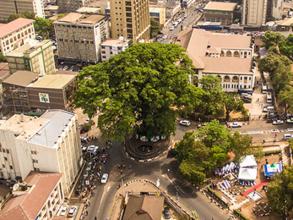
Project 1: Participation, Legitimacy, and Tax Compliance: Studying the Impacts of Property Tax Reform in Freetown
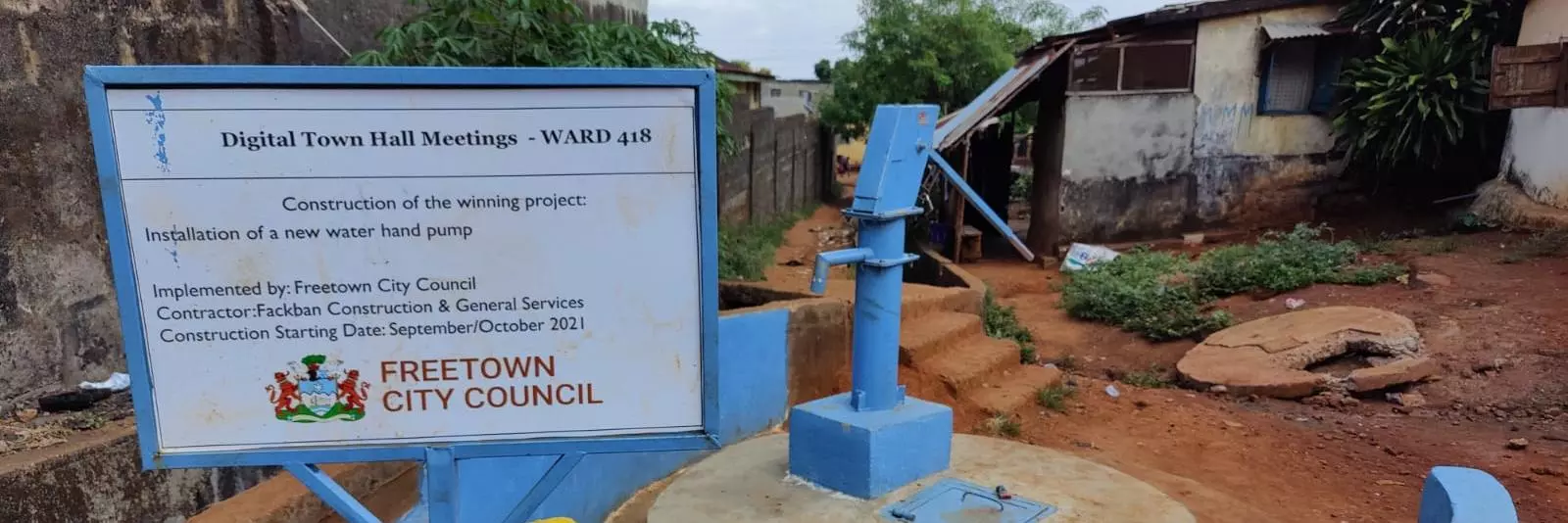
In collaboration with Freetown City Council, this project ran a large-scale participatory budgeting intervention to explore whether citizen participation in policy decision (a form of direct democracy) can increase perceived government legitimacy and subsequently increase semi-voluntary tax compliance.
The intervention invited over 3,600 property owners to participate in Digital Town Halls (DTH)-interactive WhatsApp forums where they could discuss local priorities, propose development projects, and vote on how funds should be spent. The winning projects (valued at around $1,500 each) were then implemented in participants' neighbourhoods.
The DTHs served as part of a broader intervention that contains three components:
- DTHs
- Service delivery
- Notification calls about delivered services (to ensure that DTH participants are aware of successful project implementation)
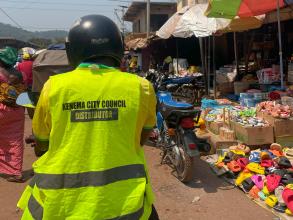
Project 2: Tax Enforcement and Tax Culture: A Field Experiment on Property Tax Compliance in Kenema
In collaboration with the Kenema City Council (KCC), this project focuses on how local governments in weak institutional settings can improve property tax compliance through enforcement.
KCC has low levels of compliance with property tax, resulting in low revenues and fiscal resources for local government which, in turn, results in a lack of funding for public services. The current tax enforcement strategies in place by the council tend to be ineffective and unsystematic. At the same time, rapid urbanisation in the region increases the demand for the Council's services just as revenue is being restricted by this low compliance.
While much of the existing literature focuses on voluntary compliance, this project shifts the focus to the political and administrative feasibility of enforcement-based strategies-an area often overlooked due to concerns about legitimacy, capacity, and potential backlash. The project explores how enforcement strategies, when designed in coordination with local institutions, can improve compliance while remaining politically acceptable.
The study employs a randomised saturation design that varies the intensity of enforcement across clusters-specifically, the proportion of property owners targeted within each area. This design enables the identification of both direct effects on those receiving enforcement and indirect effects on untreated households within the same social environment.
RESULTS
Project 1: Freetown
Outcomes from this project show that governments can use direct democracy to overcome legitimacy constraints on state capacity building. Participants reported that the DTHs were useful and safe spaces for exchanging view with representatives and community members. The overall results demonstrate that participatory budgeting can increase citizens' perceptions of government legitimacy. These positive effects are consistent across political supporters and opponents of the mayor.
Second, despite those relatively universal and durable impacts on legitimacy, researchers find that effects on compliance are heavily moderated by partisanship. Researchers argue that these heterogeneous impacts emerge due to partisan cue exposure: Through participation, citizens learn where political actors stand on specific issues, which prompts participants to update their policy preferences and related compliance behaviour.
Project 2: Kenema
Research ongoing, results to follow.
PROJECT DETAILS
Timeline
September 2024 - September 2026
Location
Sierra Leone

Theme
Politics and Institutions
Photo credits:
Emile Eleveld
Tom-Henry Taubhorn
Mike Duff
Associations



PUBLICATIONS AND MORE
NWO Grant Award
The Dutch Research Council (NWO) has awarded Senior Research Fellow Niccolò F. Meriggi a Talent Programme Veni Scheme grant to support a new research initiative focused on understanding and addressing the political-institutional barriers to effective property taxation in Western Africa.
21 July 2025
NWO Veni Funding List
VoxDev Article
Can participatory budgeting build government legitimacy and increase tax revenues in weak states?
Grieco K, Kamara AB, Meriggi NF, Michel J, Prichard W
27 June 2025
CSAE Working Paper
Participation, legitimacy and fiscal capacity in weak states: Evidence from participatory budgeting
Grieco K, Kamara AB, Meriggi N, Michel J, Prichard W
CSAE Working Paper, 25 May 2025
LoGRI Working Paper
Participation, legitimacy and fiscal capacity in weak states: Evidence from participatory budgeting
Grieco K, Kamara AB, Meriggi NF, Michel J, Prichard W
LoGRI Working Paper, 25 May 2025
Forthcoming Working Paper
The Political Economy of Property Tax Reform in Freetown, Sierra Leone: Lessons from an Innovative Reform Programme
Kamara AB, Meriggi NF, Prichard W, Stewart-Wilson, G
Forthcoming
Forthcoming Working Paper
Mapping Tax Compliance: Unpacking the Social, Economic, Political and Network Drivers of Tax Compliance in Freetown, Sierra Leone
Kamara AB, Grieco, K, Meriggi NF, Prichard W
Forthcoming